
How to set fair cancellation and make-up class rules for a dance school
·Wootera
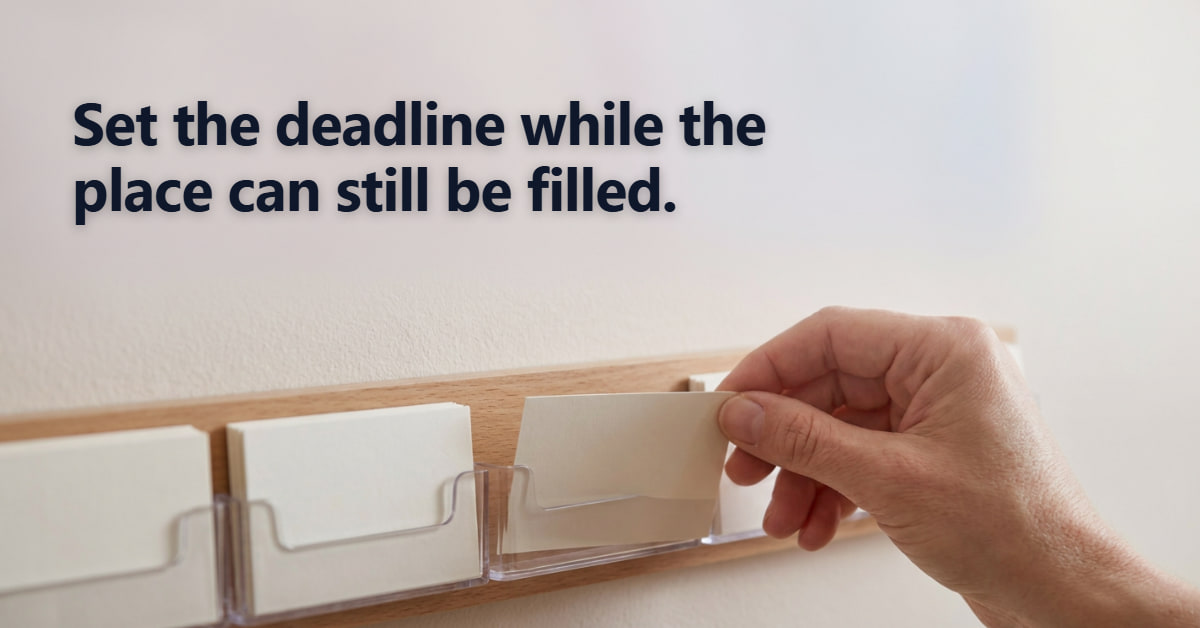
Set your cancellation deadline at the latest point when you can still offer the released place to another student. Set the validity of make-up classes according to how often suitable alternatives run and how much capacity they usually have.
There is no universal number of hours or weeks that works for every dance school. Fair rules reflect your timetable, booking process and available places. They should give students a realistic chance to replace a missed lesson without creating an unlimited future claim on class capacity.
Base the cancellation deadline on when you can refill the place
Start with one practical question: how late can a student cancel while still giving you a realistic chance to fill the place?
Work backwards from that point. A shorter deadline may be practical when students manage bookings online and people on a waiting list respond quickly. You may need a longer deadline when staff process changes only during reception hours or contact parents manually.
For example, one school might use a 12-hour deadline because suitable replacements are common and bookings are managed online. Another might require cancellation by the previous evening. These are examples, not standards for every school.
Test your proposed deadline against the complete process:
-
When does the school learn that a place is available?
-
Which students are eligible to take it?
-
How will they be contacted?
-
How much time do they need to respond and arrive?
-
Are cancellations processed outside reception hours?
The deadline should leave enough time for these steps. A policy can look generous on paper but still release places too late for the school to reuse them.
Give make-up classes a clear validity period
A make-up class should give the student a realistic opportunity to replace a missed lesson. It should not remain available indefinitely.
Base the validity period on the rhythm of your timetable. If an equivalent class runs several times each week, a short period may offer enough opportunities. If the correct age group or level meets only once a week, the student may need longer. Account for school holidays, performances and breaks between semesters.
Your policy should explain that a make-up class:
-
expires on a defined date or after a defined period,
-
can be used only in a suitable age group and level,
-
depends on a free place being available,
-
does not guarantee entry to a full class,
-
cannot automatically be carried into another semester.
You can also limit how many unused make-ups a student may hold at once. This prevents make-ups from accumulating beyond the number of suitable places your timetable can provide. Disclose any limit before enrolment and payment.
Separate student cancellations from lessons cancelled by the school
Your policy should distinguish three situations.
The student cancels before the deadline. The student may become eligible for a make-up, subject to the expiry date, suitable level and available capacity.
The student cancels after the deadline or does not attend. The lesson may count as used because the school no longer has a realistic chance to fill the place. If late cancellations and no-shows have the same outcome, state this directly.
The school cancels the lesson. Apply a separate remedy because the student did not cause the cancellation. Depending on the course format and applicable local requirements, this could be a replacement date, credit, refund or extension.
This distinction gives staff a simple decision path and prevents a student absence rule from being applied when the school cancelled the lesson.
Keep the information and decision rules in one place
Staff should be able to see:
-
when the cancellation was received,
-
which lesson it concerned,
-
whether it was timely, late or a no-show,
-
whether a make-up was granted,
-
when the make-up expires,
-
whether it was used,
-
whether an exception was approved.
zonno dance is a system for managing dance schools and studios. It brings schedules, reservations, students, payments, attendance and passes into one place.
Define which timestamp controls the deadline. This might be the time recorded by your online booking system or the time a message reaches one designated contact channel.
Avoid accepting cancellations through an undefined mix of private messages, reception calls and social media accounts. If those messages are not recorded consistently, similar cases may receive different decisions. Staff should also know who can grant a make-up, extend its validity or approve an exception.
Create one process for serious exceptions
Do not handle unusual cases through private agreements between individual students and instructors. Comparable situations should follow the same review process.
Define four points:
-
Eligible circumstances: Situations that may receive individual review, such as prolonged illness or a serious family emergency.
-
Standard circumstances: Situations that normally follow the usual rule, such as forgetting a lesson or deciding too late that the time is inconvenient.
-
Decision authority: The role allowed to approve an exception, such as the owner or operations manager.
-
Evidence and records: When documentation may be requested and where the decision is recorded.
An exception does not always need to provide a full replacement lesson. Depending on the circumstances and available space, it could extend an existing make-up, move one booking or provide a limited credit. Offer only options your school can apply consistently.
Instructors should know where to send exception requests. They should not make private promises outside the agreed process.
Publish and test the policy before enrolment
Students and parents should be able to review the full conditions before enrolling and paying. Keep the policy in one accessible place, link to it during enrolment and repeat the essential points in the confirmation.
The short version should answer these questions:
-
Where must a cancellation be submitted?
-
What is the deadline?
-
What follows a timely cancellation?
-
When does a make-up expire?
-
Does its use depend on level and available space?
-
What happens after a late cancellation or no-show?
-
What happens when the school cancels?
-
How can a serious exception be requested?
When changing the policy, include an effective date. Explain whether the change applies only to new enrolments and purchases or also to existing courses and passes. Check the relevant legal and consumer requirements before applying new conditions.
Before publication, test the wording against five cases: a cancellation just before the deadline, a no-show, a fully booked replacement class, prolonged illness and a lesson cancelled by the school. If staff reach different decisions in the same case, clarify the rule or the decision authority.
Frequently asked questions
Should every timely cancellation guarantee a make-up place?
No. A timely cancellation can make the student eligible for a make-up without guaranteeing space in a specific class. Use can still depend on the correct level, available capacity and the expiry date.
How long should a make-up remain valid?
Choose a period that offers several realistic opportunities to attend a suitable class. Consider how often equivalent classes run, whether holidays interrupt the timetable and how much space those classes usually have.
Can late cancellations and no-shows follow the same rule?
Yes, if both leave the school without a realistic chance to refill the place. State whether the lesson counts as used and how serious circumstances can be submitted for review.
How should you review your current policy?
Ask three questions: Can a cancelled place still be filled? Does the student have a realistic chance to use the make-up? Would the same case receive the same decision next week?